
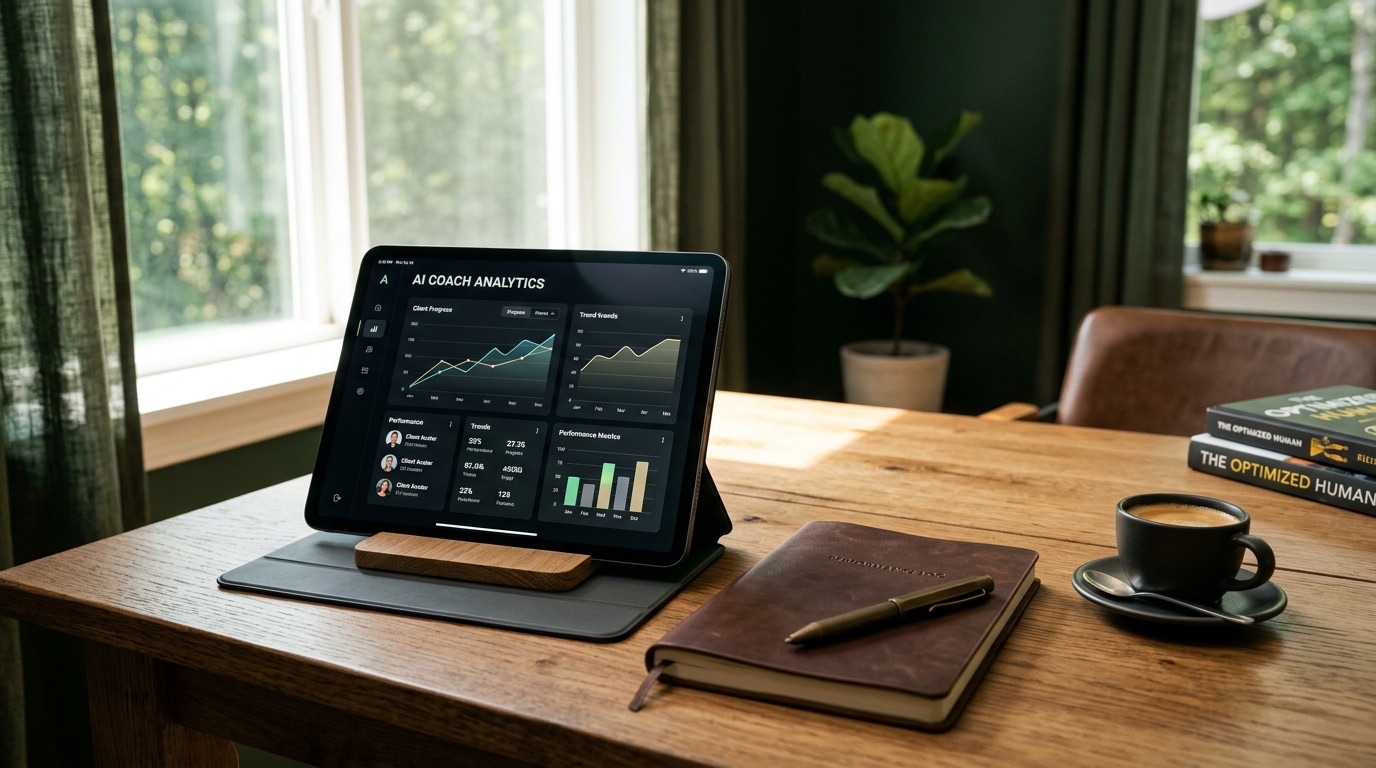
Every coaching software vendor now claims to have "AI-powered" something. Most of these claims are either a thin wrapper around a generic language model API bolted onto an old product, or a genuinely useful feature dressed up in language that oversells it. Coaches trying to figure out what's actually worth paying attention to are stuck sorting signal from marketing copy, often with no way to test a feature before committing to a subscription.
This is worth sorting out properly, because the honest picture is less dramatic than either the hype or the backlash suggests. AI isn't replacing coaches, and it isn't useless either. It's a leverage tool, similar in kind to spreadsheets or scheduling software before it, that removes friction from specific, well-defined tasks. It does not replace the judgment, relationship, and accountability that make coaching work in the first place.
Where AI Genuinely Helps Today
The useful applications of AI in fitness coaching right now share a common trait: they automate tedious, repetitive, low-judgment work that used to eat into time a coach could spend on actual coaching.
Food Logging Without the Manual Entry Burden
Manually logging every meal by searching a food database and entering quantities is the single biggest reason clients abandon nutrition tracking. Voice and photo-based logging, where a client snaps a picture of their plate or describes what they ate out loud and the system estimates the macro breakdown, removes most of that friction. The estimates aren't perfect, portion size from a photo is inherently approximate, but for the purpose of spotting trends over weeks rather than nailing a single day's numbers exactly, approximate is good enough to be genuinely useful.
The bigger win here is adherence. A client who logs consistently because it takes fifteen seconds gives a coach far more usable data than a client who logs meticulously for three days and then stops. Coaches don't need perfect data from every client. They need continuous data from most clients, and that requires making logging nearly frictionless.
Automated Trend Detection Across a Client Roster
A coach running 15 to 20 clients used to need real time and real attention to notice that one client's weight has stalled for three weeks, another's average sleep has dropped noticeably, or a third's workout completion rate has quietly fallen off. That review used to mean opening each client's log individually and eyeballing the numbers, something that tends to get skipped when a coach is busy, which is exactly when it matters most.
Software that automatically surfaces these trends, flat weight trends, missed check-ins, declining adherence, workout logs suggesting a plateau, does something coaches structurally cannot do at scale: watch every client's data every day without exception. This doesn't replace the coach's judgment about what the trend means or what to do about it. It replaces the manual scanning work that used to have to happen before a coach could even notice there was something to look at.
Directing Limited Attention to the Clients Who Need It
This is the real leverage point, more than any single automated feature. A coach's most limited resource isn't knowledge, it's attention. Every hour spent scrolling through a client roster looking for problems is an hour not spent solving a problem that's already been found. When a system flags "this client's data suggests something is off" automatically, the coach's attention shifts from searching to responding. For a coach managing more clients than they can personally check in on daily, that shift is the difference between catching a struggling client in week one versus week four.
Where AI Still Falls Short
None of the above touches the parts of coaching that clients actually pay for and stick around for.
Motivation and Accountability
A flagged trend tells a coach that a client's adherence has dropped. It does not tell the coach why, and it certainly doesn't fix it. Maybe the client's work schedule changed. Maybe they're dealing with an injury they haven't mentioned. Maybe they've quietly lost confidence in the program. Figuring out which of these is happening, and responding in a way that actually re-engages the client, requires a conversation, not a dashboard. Accountability that sticks comes from a client knowing a specific person is paying attention to them, not from an app sending a generic reminder.
Nuanced Program Adjustments
Programming decisions based purely on logged numbers miss context that only comes from talking to a client. A client who says a lift "felt heavy but controlled" needs a different response than one who says it "felt heavy and my form fell apart." Both might log the same weight and reps. An experienced coach reads tone, hesitation, and history into that distinction. Current AI tools are nowhere close to reliably making that judgment call, and the failure mode isn't a small inconvenience, it's a bad programming decision that costs a client weeks of progress or an injury.
Trust
Clients stay with coaches they trust, and trust is built through consistent, personal interaction over time, not through a well-designed dashboard. A client going through a rough patch, injury, life stress, motivation collapse, needs a coach who knows their history and will tell them something they might not want to hear. That relationship is the actual product in fitness coaching. Software supports it. It does not substitute for it, and coaches who let tooling replace direct client contact tend to see it show up in retention within a couple of months.
How to Evaluate AI Tools Without Buying the Hype
Coaches shopping for software in 2026 are going to see "AI" attached to nearly everything. A few honest questions cut through most of the noise.
Does it save real time, measured in minutes per client per week, not just in theory? If a feature is described in terms of what it could theoretically do rather than a specific task it removes from your week, be skeptical. Ask for a concrete example: how many minutes does this save you when reviewing ten clients on a Monday morning?
Does it improve the client's actual experience, or just the sales demo? Photo food logging that clients actually use because it's fast is valuable. A chatbot that clients try once and ignore because it gives generic advice is not, regardless of how it looks in a product walkthrough.
Is the underlying task well-suited to automation in the first place? Trend detection across numeric data is a good fit for automation. Nuanced motivational messaging is not, and any tool claiming to fully automate that side of coaching is overselling what the underlying technology can actually do reliably.
Would you notice if the feature were switched off? This is the simplest test. Photo logging, automated check-in reminders, and flagged trends are the kind of feature you'd notice missing within a week because they save real, recurring effort. A lot of "AI" marketing describes features that a coach would barely notice losing, which tells you how much genuine value was there to begin with.
Is it replacing your judgment or informing it? A useful tool surfaces information and lets the coach decide. A tool that tries to make the coaching decision itself, adjusting a client's program automatically without the coach reviewing it, is taking on a job it isn't equipped to do well, and it puts the coach's name on a decision they didn't actually make.
The Practical Takeaway
The coaches getting real value from AI in 2026 aren't the ones chasing every new feature with "AI" in the name. They're the ones who identified the specific repetitive tasks eating their time, food logging follow-up, manual trend spotting, chasing missed check-ins, and adopted tools that handle those tasks well, freeing up hours for the actual coaching conversations that keep clients around. The technology is a lever. The coaching relationship is still the thing that needs a human on the other end of it.